🇦🇺 Japanese for Australian learners • Anki SRS

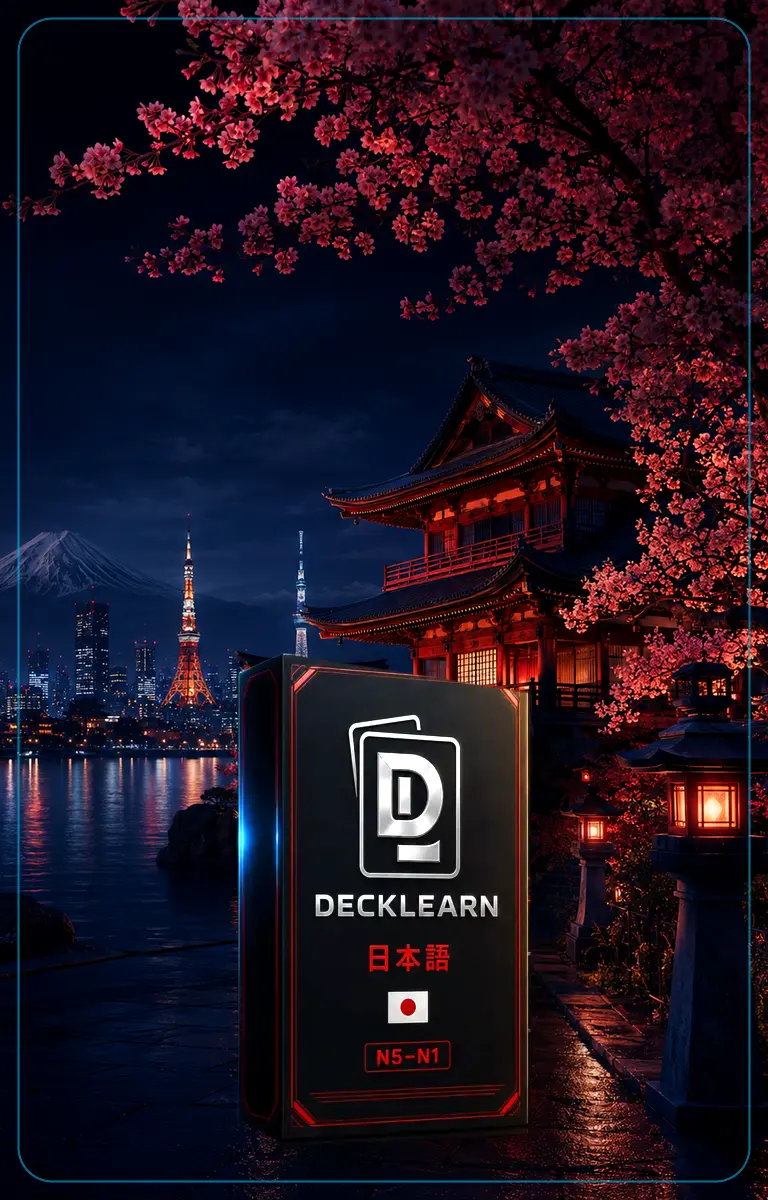
Japanese Anki Deck Australia — 10,000 N5–N1 sentences with audio and furigana

Learn Japanese with a complete Anki deck designed for Australian learners who want structure, consistency and long-term progress. Study real Japanese sentences with audio, furigana, translation, word-by-word meaning and spaced repetition.

This Australia edition is useful for learners interested in JLPT, anime, manga, travel to Japan, university study, exchange programs, Japanese culture, reading, listening and daily sentence review.

US$79.00 US$19.99

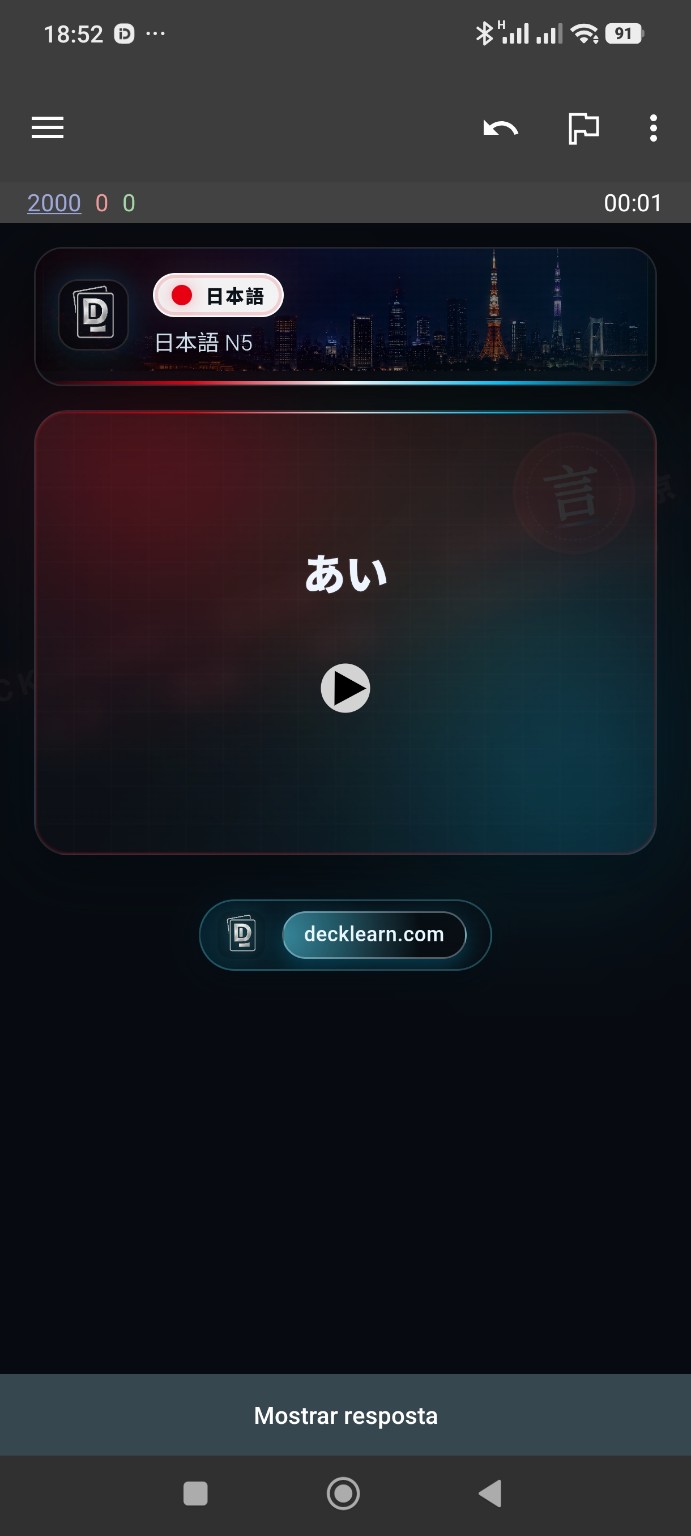
Works on Anki desktop and AnkiDroid. After importing the .apkg deck, you can study offline and review daily.

AUSTRALIA EDITION

Why this Japanese deck is useful for learners in Australia

Japanese is a strong choice for Australian learners because Japan is culturally, geographically and professionally relevant: travel, anime, manga, gaming, food, business, tourism, university study and exchange programs all create real reasons to learn. The challenge is not motivation — it is building a routine that lasts.

DeckLearn Australia gives you a structured way to review Japanese every day without building thousands of cards yourself. You import the deck into Anki or AnkiDroid, complete your due reviews, and let spaced repetition manage the timing. This is especially helpful for Japanese because kana, kanji, particles, verb forms and sentence patterns require repeated exposure.

Practical goal: start small, review daily, and avoid overload. Japanese rewards consistency more than intense random study sessions.
WHY IT WORKS

Why sentence-based Japanese flashcards beat isolated vocabulary

Many learners get stuck because they know individual words but cannot read, listen or respond quickly. The missing piece is usually pattern recognition: particles, collocations, verb endings, set phrases, kanji readings and common sentence frames.

When you study Japanese in full sentences, you learn words together with the grammar that makes them useful. You see how です/ます style works, how casual speech changes endings, how particles mark roles, and how kanji and kana interact in real text. Over time, your brain stops translating word-by-word and starts recognising familiar patterns.

Spaced repetition then makes that memory durable. Anki schedules reviews close to the moment you are about to forget. If you keep a small daily routine, the deck builds momentum instead of becoming a random pile of notes.

🎧

Audio for every sentence

Train your ear and reinforce pronunciation, rhythm and natural pacing through repeated listening.

Kanji + furigana support

Connect kanji to reading and meaning without stalling. Build reading speed gradually through context.

🔤

Word-by-word meaning

Understand how each part contributes to the sentence, not just a loose overall translation.

🧠

Spaced repetition

Anki handles the review schedule. You review what is due today and keep the habit alive.

📦

.apkg ready

Import the deck into Anki or AnkiDroid. The media and card structure are already prepared.

🇦🇺

Australia edition

Australia-specific URL, local study context and a regional SEO focus for Australian learners.

JLPT N5–N1

From N5 beginner to N1 advanced — structured for long-term review

This deck is organised from easier to harder content. You will see beginner survival Japanese early, then gradually move into longer sentences, more kanji, and higher-level grammar and nuance.

N5
Basics — kana exposure, core verbs, polite patterns, particles and essential daily phrases.
N4
Daily life — family, school, work, travel situations and common grammar that appears constantly.
N3
Real conversations — longer structures, more kanji, natural spoken sentence frames and stronger comprehension.
N2
Fluency — denser input, reading-style sentences, grammar nuance and higher complexity patterns.
N1
Precision — advanced reading, formal language, idiomatic expressions and high-level comprehension practice.

Helpful for JLPT study, but designed mainly for usable Japanese comprehension in reading, listening and sentence recognition.

EXAMPLE

What one card looks like

おはようございます。

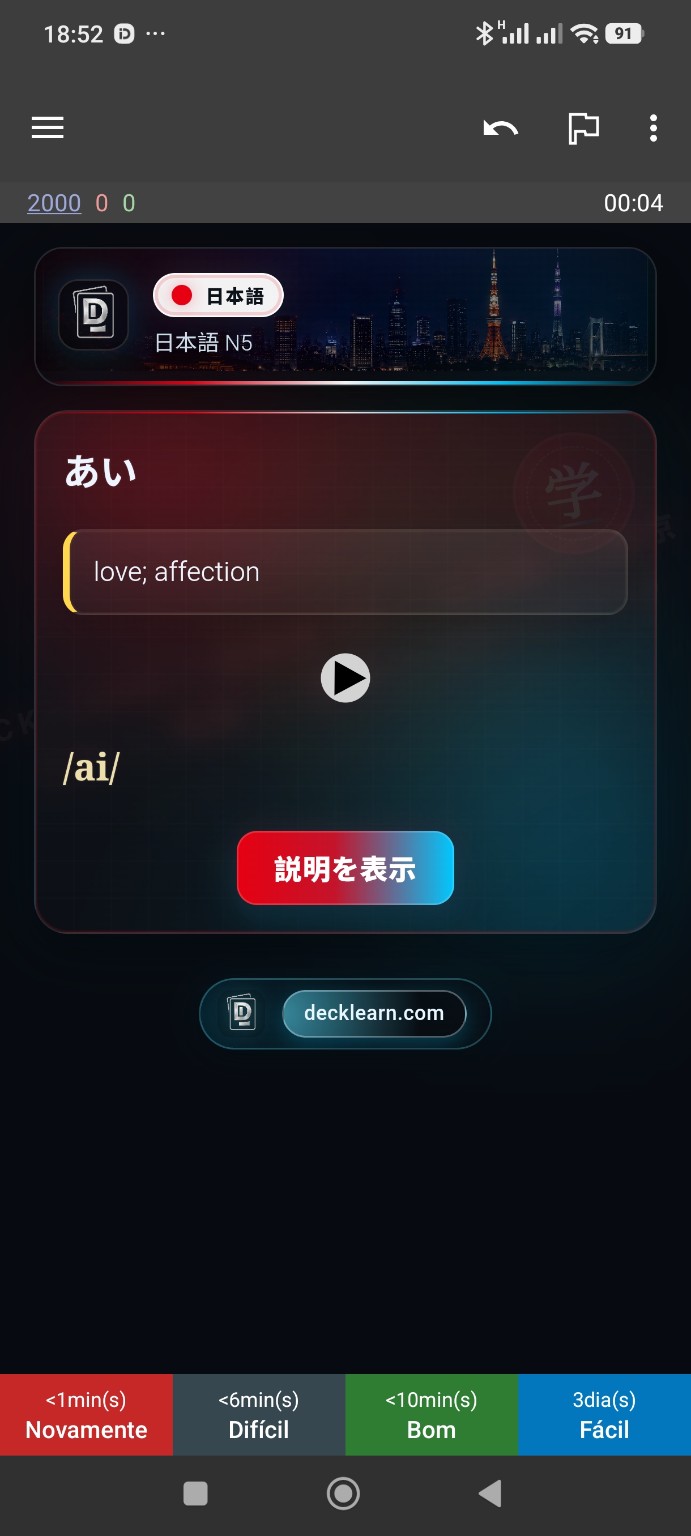
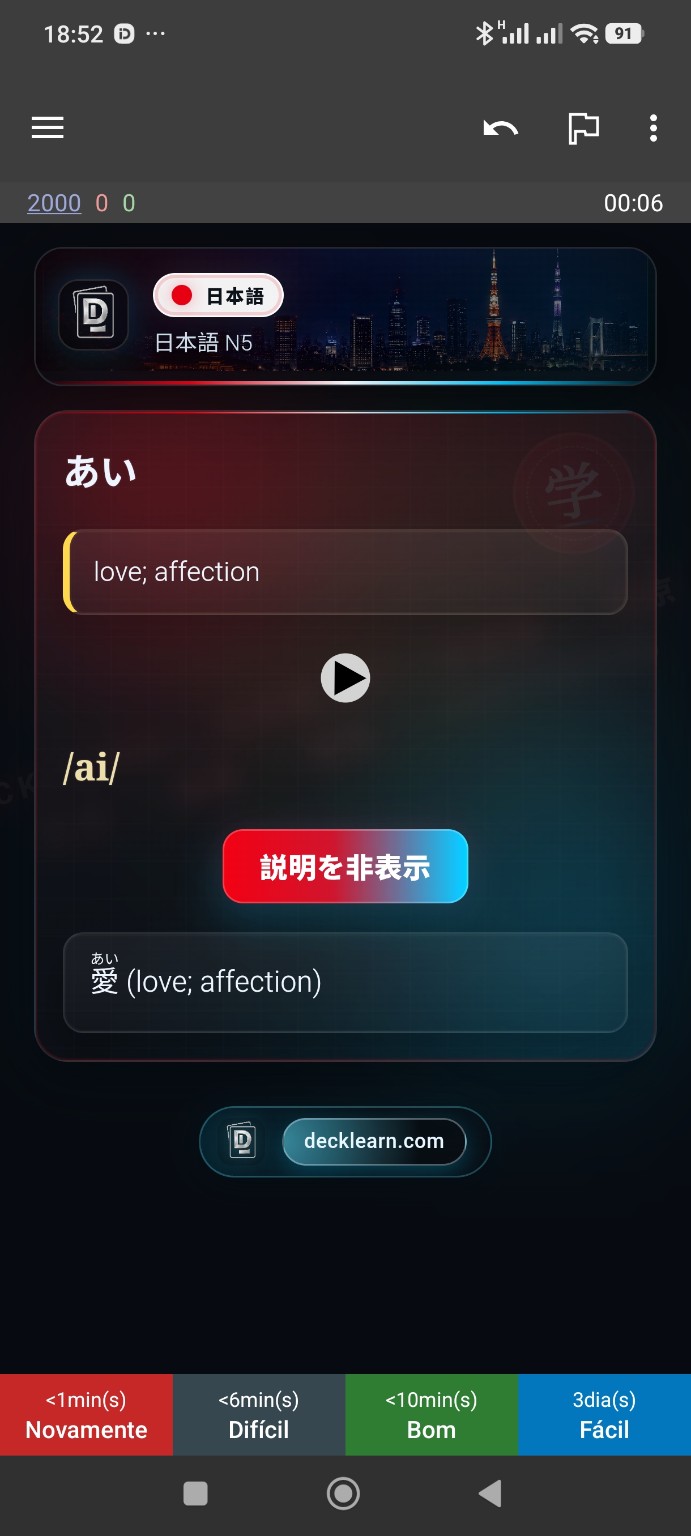
Translation: Good morning. Reading: ohayou gozaimasu Word-by-word: おはよう = good morning • ございます = polite ending

The deck uses a consistent card structure so you can review quickly without mental friction. The goal is to repeat real usage until it feels automatic.

DAILY ROUTINE

A realistic 15–30 minute Japanese routine

Most people quit because they try to do too much. The easiest way to win with Anki is to keep the daily workload stable. Start small and protect the habit.

  • Step 1: Do reviews due today first.
  • Step 2: Add a small number of new cards only if reviews feel manageable.
  • Step 3: If reviews grow too large, reduce new cards for a few days.
  • Step 4: Keep the streak. Even short sessions build momentum.

If your schedule is busy, 10 minutes is still valuable. The key is consistency.

GUIDE

How to improve Japanese with Anki in Australia

Learning Japanese is not just about memorising vocabulary. Japanese has particles, verb endings, politeness levels, kanji readings, kana, fixed expressions and sentence patterns that do not map one-to-one to English. This is why many learners understand a lesson but still freeze during reading or listening.

Sentence review fixes that. When you repeatedly see Japanese in context, you learn how words behave inside real structures. You see particles like は, が, を, に and で in action. You notice verb endings, polite forms, common expressions and natural word order. Over time, reading and listening become less mechanical.

For Australian learners, this is useful because study time often needs to fit around work, school, university, family or commuting. You do not need a perfect three-hour study block. A short daily review habit can be enough to create momentum when it is repeated over months.

The DeckLearn Australia Japanese deck gives you a prepared sentence bank from N5 to N1. You import the .apkg file, review what Anki schedules, and gradually increase exposure to Japanese. The system is simple enough to keep using, which is the most important part of language learning.

Level Focus Useful for
N5 Kana, simple phrases, basic particles and polite sentence patterns. Beginners, first Japanese routine and survival expressions.
N4 Daily situations, travel, school, work and common grammar. Everyday comprehension and stronger sentence recognition.
N3 Longer sentences, more kanji, connectors and natural expressions. Intermediate reading, listening and real conversation patterns.
N2 Advanced grammar, denser input, formal structures and stronger reading. JLPT support, serious study and stronger comprehension.
N1 Nuance, formal language, advanced vocabulary and complex sentence patterns. Advanced learners, high-level reading and long-term fluency.
SEO CONTENT

Japanese Anki deck Australia: N5 to N1 with audio, furigana and spaced repetition

If you are searching for a Japanese Anki deck Australia, JLPT Anki flashcards, Japanese flashcards with audio, or a complete N5 to N1 Anki deck, DeckLearn Australia is built for that use case. The Japanese deck includes 10,000 sentence-based flashcards with audio support, furigana, translation and word-by-word meaning.

Japanese is one of the languages where sentence learning matters the most. A single word is not enough because Japanese meaning depends heavily on particles, context, politeness, verb endings and implied information. By reviewing full sentences, you repeatedly see how the language actually works.

Anki helps by spacing those reviews over time. Difficult cards come back sooner, and easier cards return later. This keeps your memory active without forcing you to reread everything manually. For Australian learners with busy schedules, that efficiency matters.

You can use the deck for JLPT preparation, anime comprehension, manga reading, travel to Japan, listening practice, university language study, exchange programs or personal long-term fluency. It should be combined with real listening, reading and speaking practice, but it gives you a powerful memory base.

Common searches: Japanese Anki deck Australia, Japanese flashcards Australia, JLPT N5 Anki, JLPT N1 deck, Japanese spaced repetition Australia, Japanese sentences with furigana, Japanese AnkiDroid deck, Japanese .apkg deck, learn Japanese with Anki Australia, kanji with context, Japanese audio flashcards, Japanese SRS routine, DeckLearn Australia Japanese, Japanese Anki deck US$19.99.

FAQ

Frequently asked questions

Is this the Australia version?

Yes. This is the Australia page for the Japanese DeckLearn product, available at decklearn.com/au/languages/japanese/. It is written for English-speaking learners in Australia.

How much does the Japanese deck cost?

The complete Japanese deck costs US$19.99. The price is shown in US dollars because the Hotmart checkout uses the same USD pricing as the United States version.

Is this good for JLPT?

The deck is organised from easier to harder content and covers N5 to N1 style sentences. It is helpful for JLPT practice, especially for sentence recognition, vocabulary exposure and listening familiarity. For exams, combine it with mock tests, reading practice and grammar-specific review.

Do I need a computer, or can I use only AnkiDroid?

You can use AnkiDroid on Android. A computer can be convenient for setup, but after importing the deck, daily reviews can be done on mobile.

What is inside the deck?

The deck contains 10,000 Japanese sentence-based flashcards across JLPT levels N5 to N1, with audio support, furigana, translation and word-by-word meaning.

How much should I study per day?

A realistic target is 15–30 minutes per day. If you are busy, 10 minutes is still valuable. The main rule is to complete reviews consistently and avoid creating an impossible backlog.

Does this include furigana and kanji help?

Yes. The deck is designed to connect kanji, kana, reading and meaning through sentence review. Furigana support helps you keep moving while still learning kanji gradually.

START

Ready to learn Japanese with a daily Anki system?

If you want consistent progress without building cards yourself, this deck gives you structure immediately. Import the .apkg, do your daily reviews, and let spaced repetition compound your results over time.

DeckLearn Australia • Japanese N5–N1 • 10,000 sentence flashcards • Audio • Furigana • SRS Anki