DeckLearn Australia — Anki decks for daily language study

DECKLEARN AUSTRALIA
decklearn.com/au

Language learning decks made for busy Australian routines

DeckLearn Australia is built for learners who want a clear, repeatable way to study languages with Anki. Instead of jumping between apps, notes and random vocabulary lists, you study real sentences organised by level, with audio, translation, and a daily review flow powered by spaced repetition (SRS).

Whether you study before work, at uni, after school, during a commute, or in short evening sessions, DeckLearn helps you turn language learning into a habit. The goal is simple: less guessing, less overload, and more consistent progress with decks that are ready to import into Anki or AnkiDroid.

The Australia edition focuses on practical use: travel around the Asia-Pacific, international work, university goals, media, exams, personal growth and long-term fluency. You choose the language, import the deck, and let Anki handle the review timing.

Instant access • Works with Anki & AnkiDroid • One-time purchase • Study offline • Built for daily review

Popular DeckLearn packs for learners in Australia

Pick one target language and start with a realistic routine. Each complete pack is designed for long-term consistency: 10,000 cards per language, structured progression, audio support, translation and Anki spaced repetition. The best deck is not the one you plan to use someday — it is the one you review every day.

Australian learners often study languages for travel, international work, university, school, migration connections, culture, anime, reading, listening or personal development. DeckLearn keeps the system simple: import the deck, finish your reviews, add a manageable number of new cards, and keep the habit alive.

10,000 cards

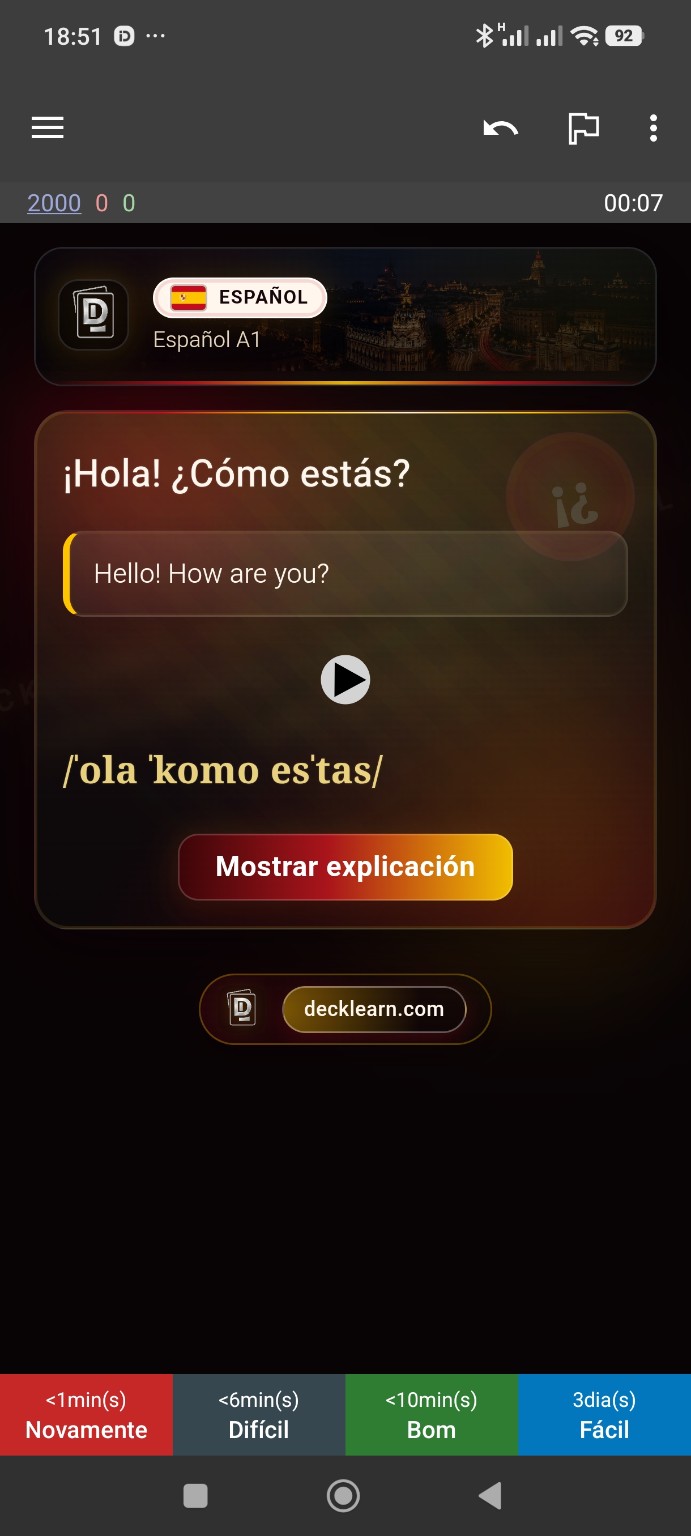
Spanish Complete (A1–C1)

A practical Spanish deck for Australian learners who want everyday comprehension, travel confidence and stronger sentence recall. Excellent for real phrases, useful verb patterns and daily review without creating cards from scratch.

10,000 cards

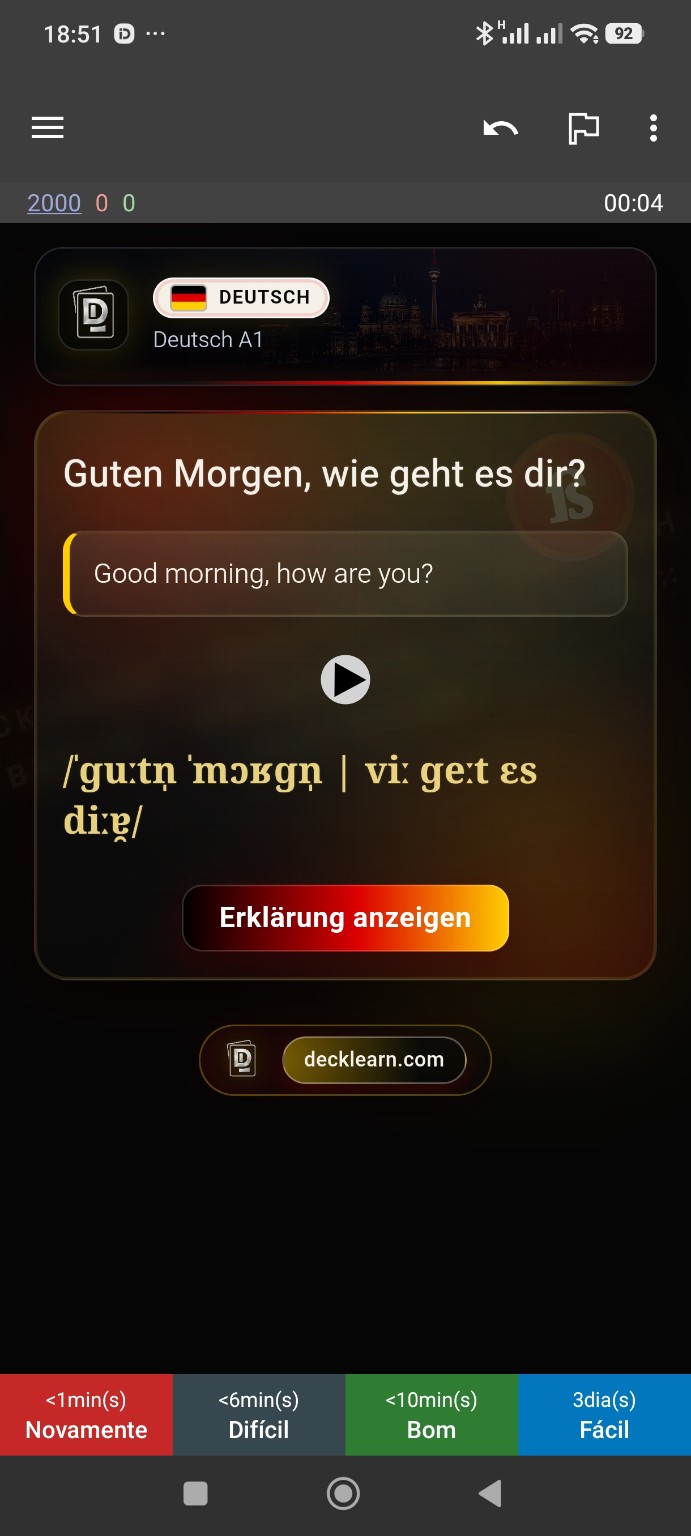
German Complete (A1–C1)

Sentence-driven German for learners who want structure, repetition and clear progression. Useful for grammar patterns, word order, study goals, work opportunities, travel and long-term memory.

10,000 cards

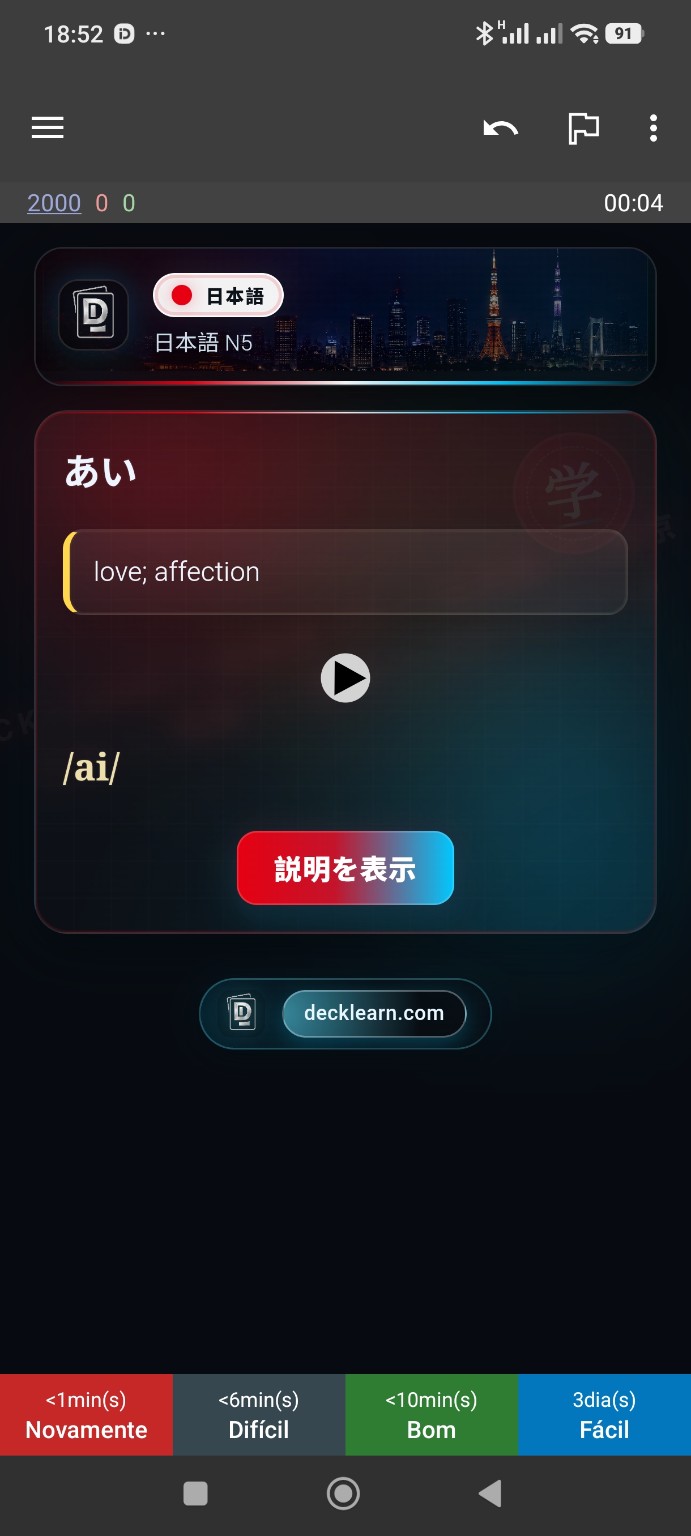
Japanese Complete (N5–N1)

A full Japanese path from beginner to advanced. Ideal for Australian learners interested in JLPT, anime, travel, reading, listening, kanji exposure and steady review across months and years.

Tip: start with the language you are most likely to use in real life. Travel, work, study, media and daily motivation all matter.

Why DeckLearn Australia is a separate edition

This Australia page is not just a copy of the US version. It is built for English-speaking learners in Australia who want a realistic study system that fits local routines: school, university, work, commuting, travel planning, evening study and short review sessions on mobile.

The learning message is different because the use case is different. Many Australian learners choose languages for nearby travel, Asia-Pacific connections, international careers, exchange programs, culture, entertainment and long-term personal goals. DeckLearn supports those goals with ready-made Anki decks instead of forcing you to spend weeks building your own cards.

Australia edition Built for daily routine Works with AnkiDroid Ready .apkg 10,000 cards Study offline

Why sentence-based decks work better

Most learners do not fail because they lack talent. They fail because they memorise disconnected fragments. A single word can have many meanings. A sentence shows the correct meaning, the natural word order, and the pattern you can reuse later.

Sentence learning reduces the gap between understanding and speaking. You train your brain to recall a complete structure, not just a translation. Over time, your output becomes faster and more natural because you are repeatedly seeing the language in context.

  • Context makes meaning stable and memorable
  • Patterns repeat, so your brain learns faster
  • Recall improves because you practise full structures
  • Confidence grows when phrases become automatic

What spaced repetition actually fixes

The biggest waste in studying is reviewing too early, which feels boring, or too late, when you already forgot everything. Spaced repetition solves that by scheduling reviews at the best time for memory.

DeckLearn is designed to match this workflow: finish your due reviews, add a manageable number of new cards, and keep sessions short enough to repeat daily. That repeatability is what makes the system useful for busy learners.

Ready .apkg Works on AnkiDroid 15–30 min/day No review overload Organised by level

A 2-week Anki plan for Australian learners

The first goal is not to become fluent overnight. The first goal is to build a routine you can actually keep. Most learners quit Anki because they add too many new cards and create a review backlog. Start smaller, finish daily reviews, and let the habit grow.

Week 1: keep new cards low, learn the buttons, and focus on finishing reviews. Week 2: increase new cards only if your review load stays comfortable. This protects your schedule, motivation and consistency.

Days 1–3: import the deck and keep it easy

Install Anki on desktop or AnkiDroid on Android. Import the deck and do a short session. Do not waste hours optimising settings. A simple setup you use every day is better than a perfect setup you abandon.

Days 4–7: protect the review habit

Reviews will grow because Anki is doing its job. If you feel overloaded, reduce new cards immediately. It is better to study 12 minutes every day than 90 minutes once a week.

Days 8–10: use audio actively

Listen to the sentence, repeat it out loud, and notice rhythm. Even a short shadowing habit improves listening accuracy and speaking speed over time.

Days 11–14: fix weak patterns with phrases

If you know words but cannot form sentences, the weak point is usually structure: word order, verb forms, prepositions, particles, articles or natural phrasing. Phrase-based flashcards solve this by showing the full pattern repeatedly.

Keywords: Anki decks Australia, Anki flashcards Australia, language learning Australia, Spanish Anki deck Australia, German Anki deck Australia, Japanese Anki deck Australia, spaced repetition Australia, SRS flashcards, AnkiDroid Australia, DeckLearn Australia, daily language review, sentence-based flashcards, .apkg language decks.

FAQ for Australian learners

Is this the Australia version of DeckLearn?
Yes. This page is the Australia edition at decklearn.com/au/, built for English-speaking learners in Australia.

Which languages are available?
The Australia edition highlights complete Anki decks for Spanish, German and Japanese. Each deck is designed for daily spaced repetition.

How long should I study per day?
Start with 10–20 minutes per day. Once the habit is stable, 15–30 minutes per day is a strong range for steady progress.

Can I study only on Android?
Yes. AnkiDroid works well for daily reviews and offline study. You can also use Anki on desktop if you prefer a larger screen.

What if my reviews become too many?
Reduce new cards first. If needed, pause new cards for a few days and complete only your due reviews. Consistency matters more than speed.

Why use sentences instead of word lists?
Sentences teach vocabulary, meaning, grammar and natural usage at the same time. This makes recall more useful for real communication.

What makes DeckLearn different?
DeckLearn gives you ready-made sentence decks for Anki, with structure, audio, translation and a study flow built for long-term memory.